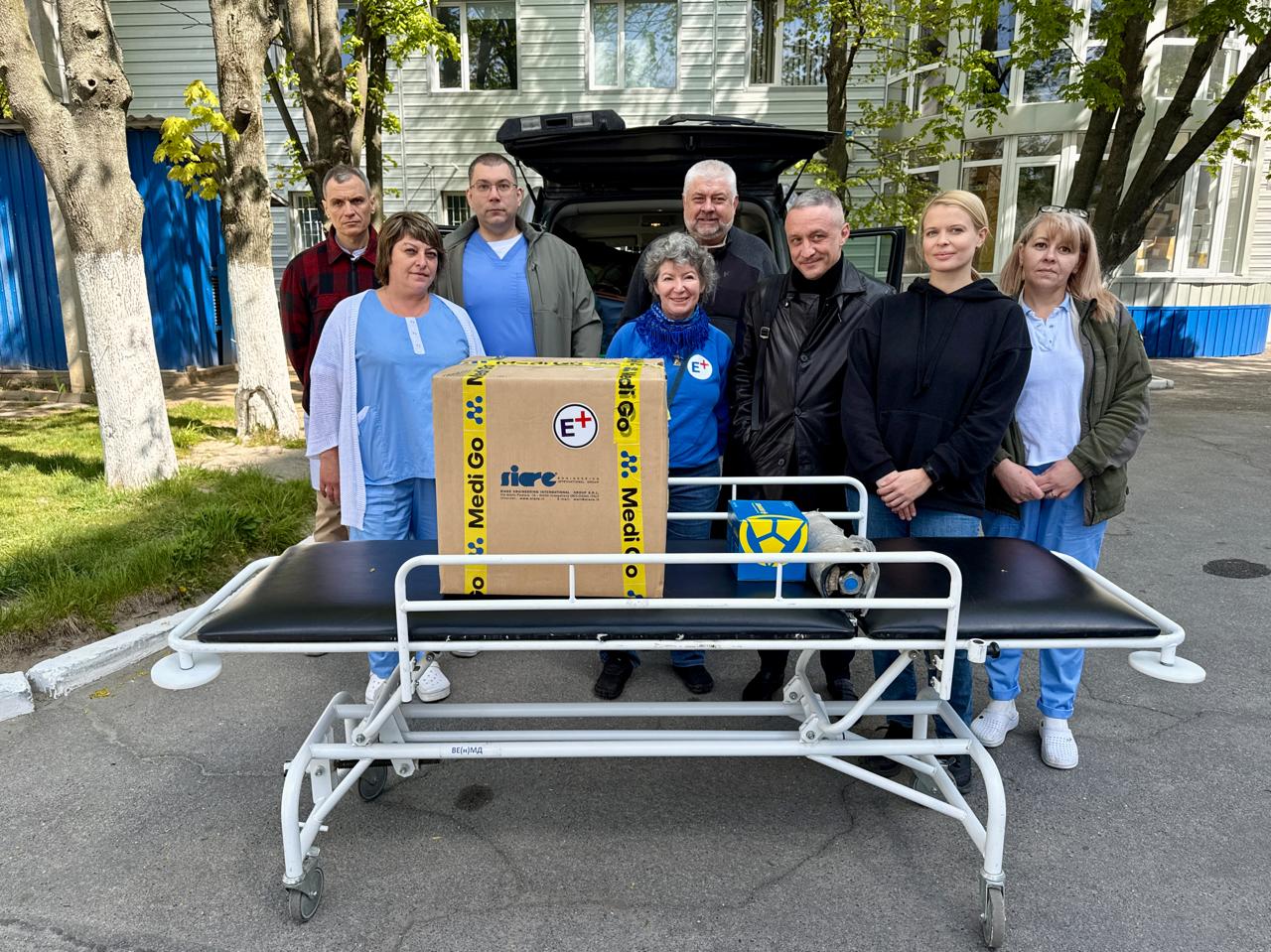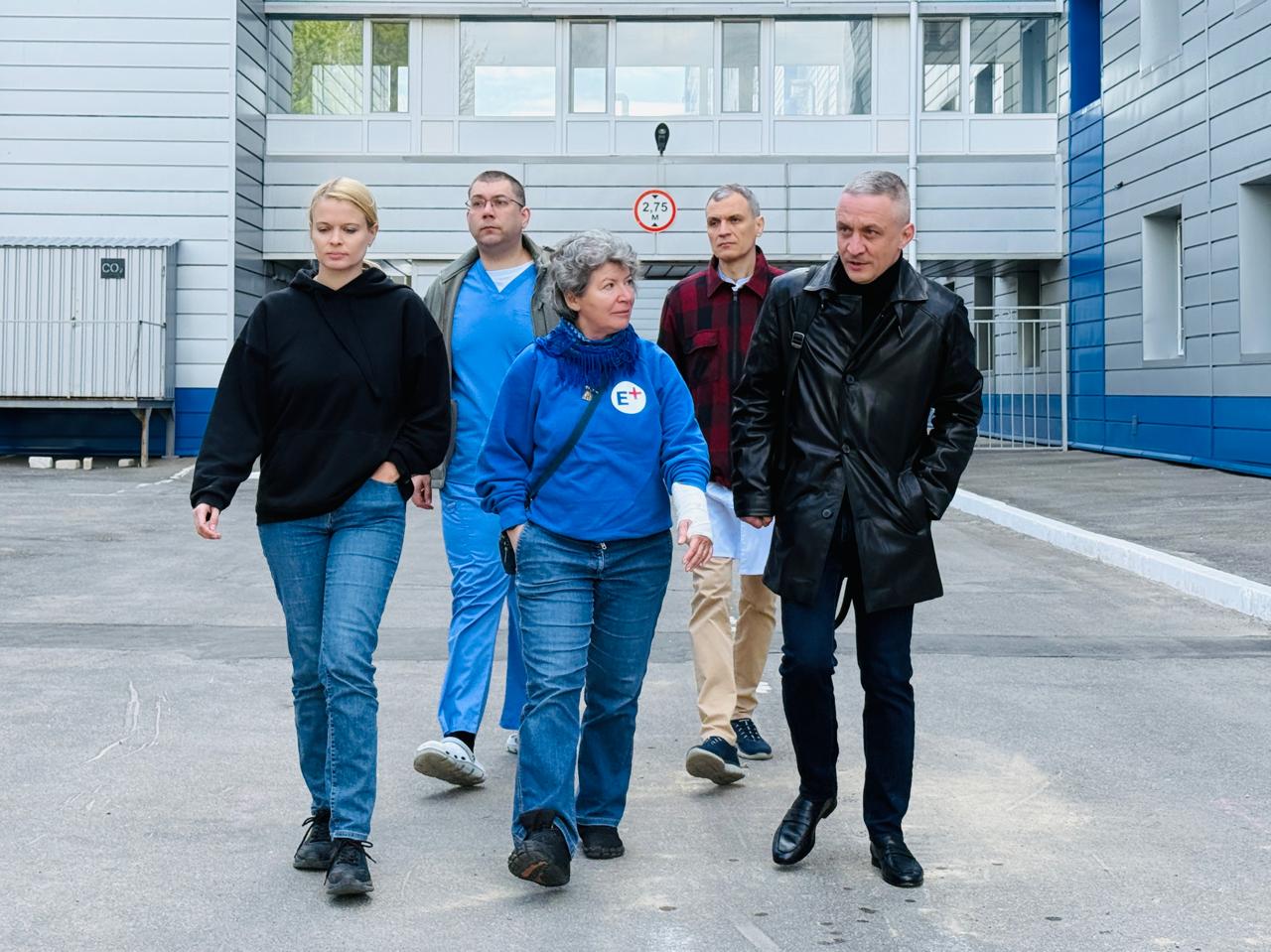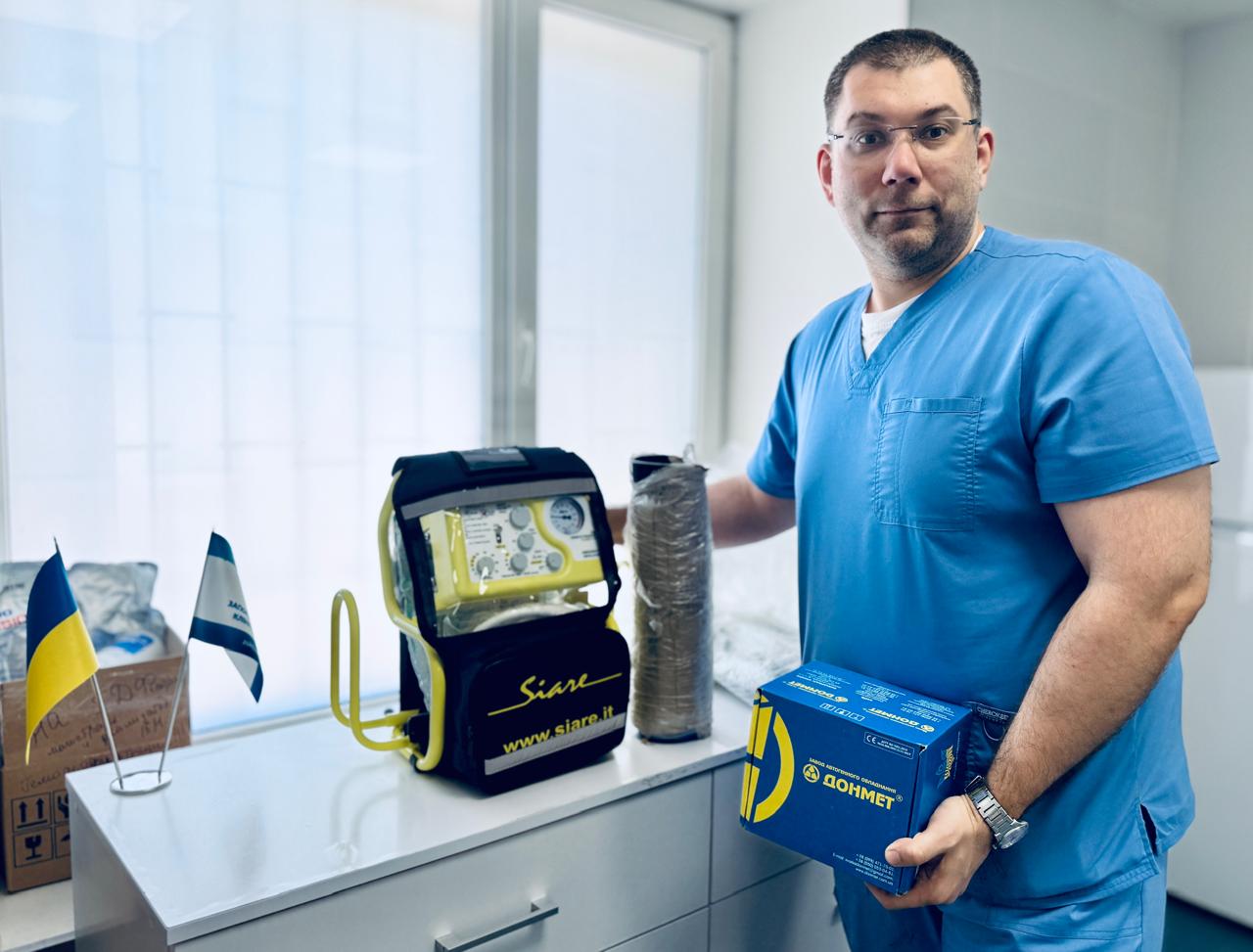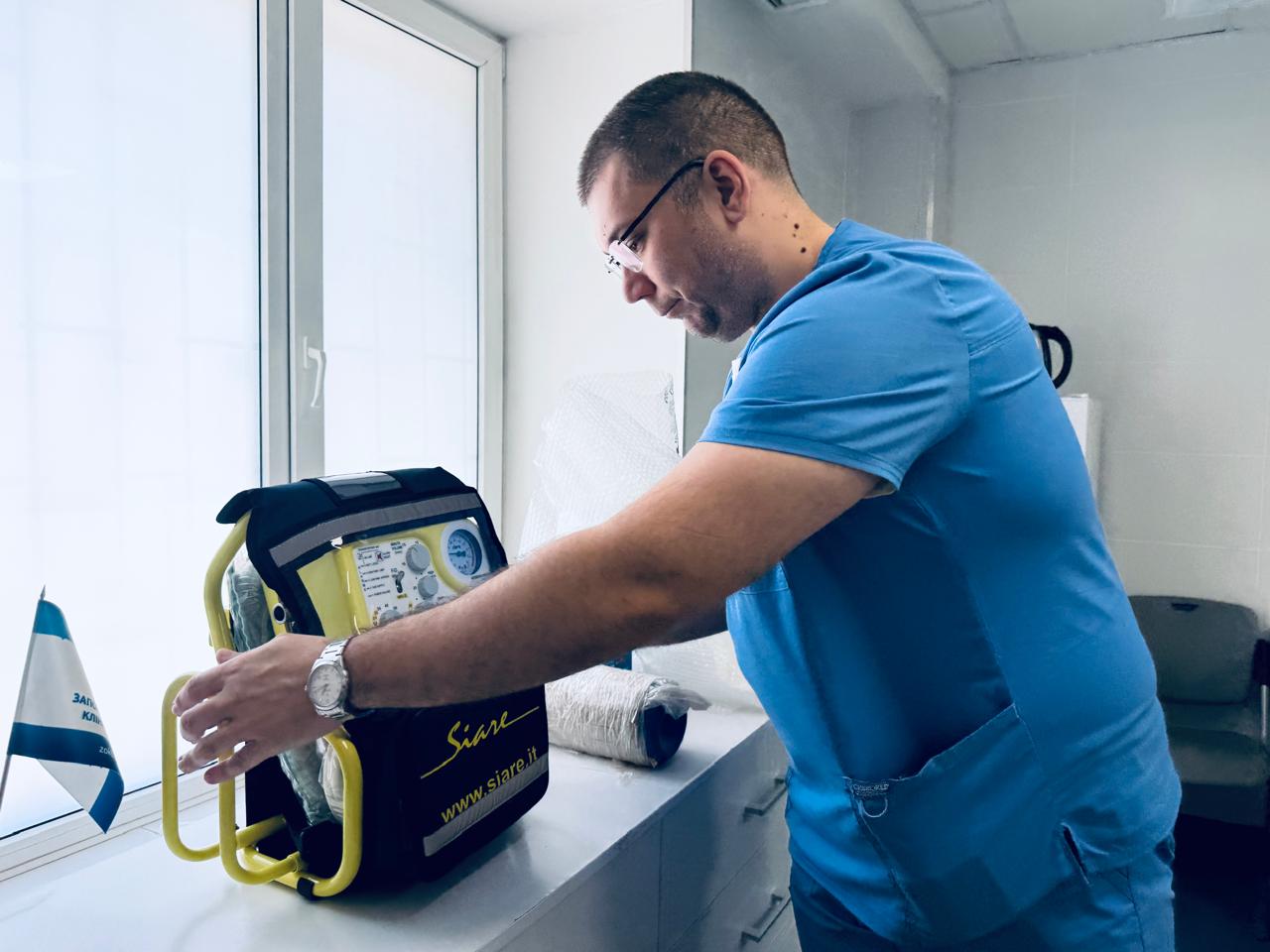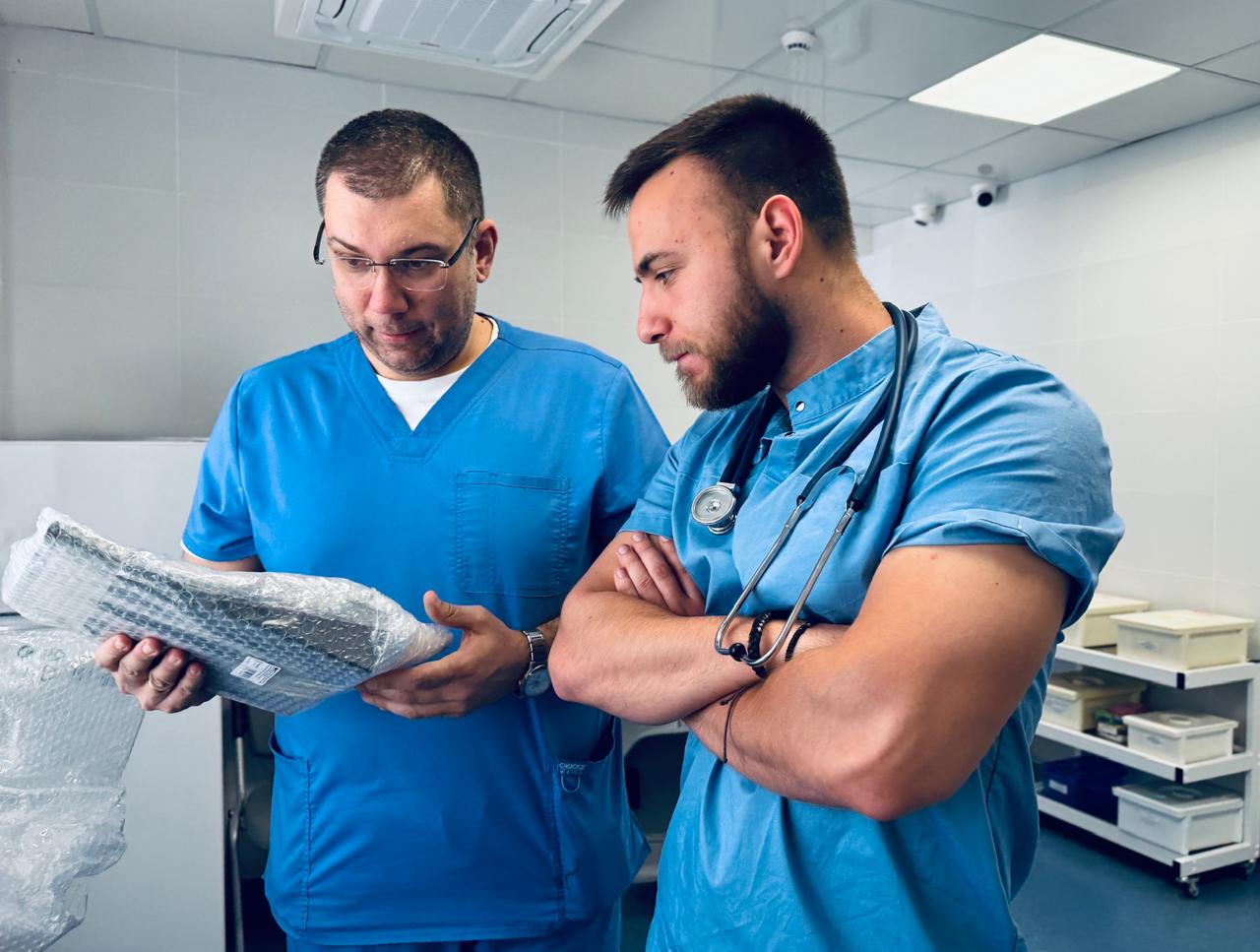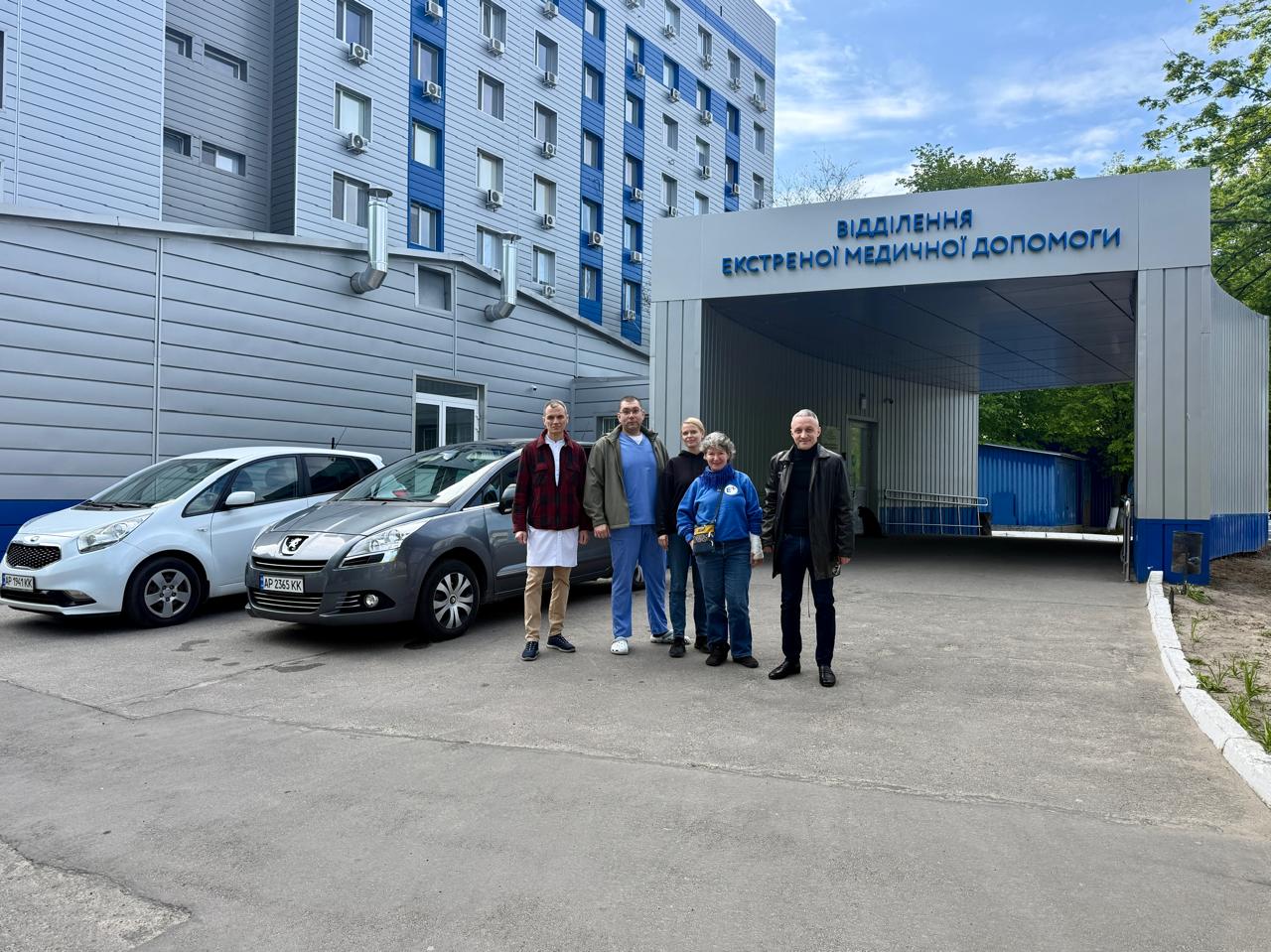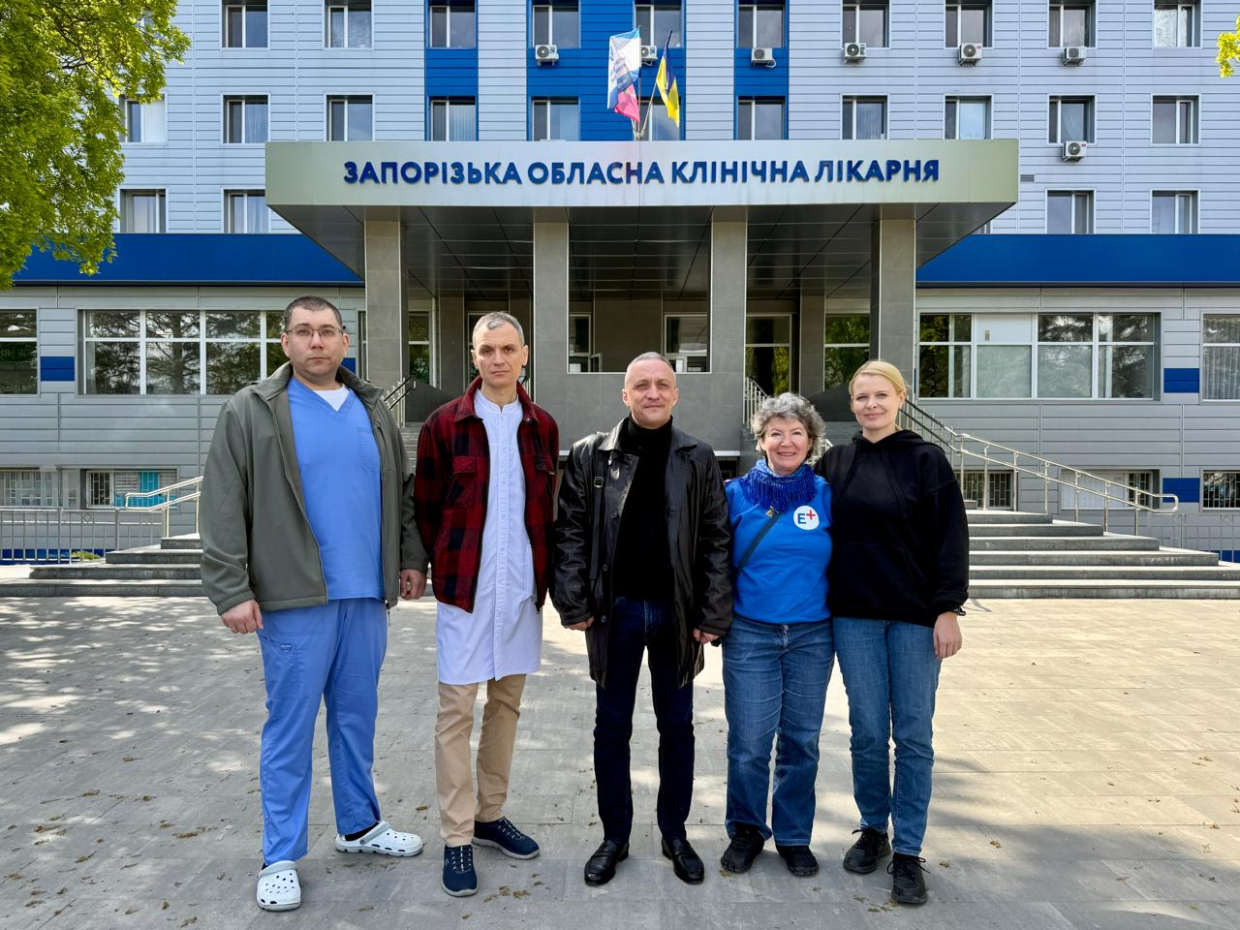
On May 2, 2026, the head of Initiative E+, Valentyna Varava, and Yana Kolesnyk — the authorised representative of donor Chernovetskiy Investment Group (CIG) — visited the Zaporizhzhia Regional Clinical Hospital. As part of the visit, the hospital received a modern transport ventilator, the SIRIO S2/T, for its emergency medicine department.
The ventilator handover isn't a one-off action. It's a logical continuation of cooperation that has been running for over a year. And it's precisely that continuity that determines its real impact on patients.
Zaporizhzhia Regional Clinical Hospital is one of the region's key medical centres: 50 structural units, more than 32,000 patients treated and over 16,000 surgical interventions in 2025 alone. Its front-line location means constant pressure, in which every piece of modern equipment is not a "bonus" but a working tool for saving lives every day.
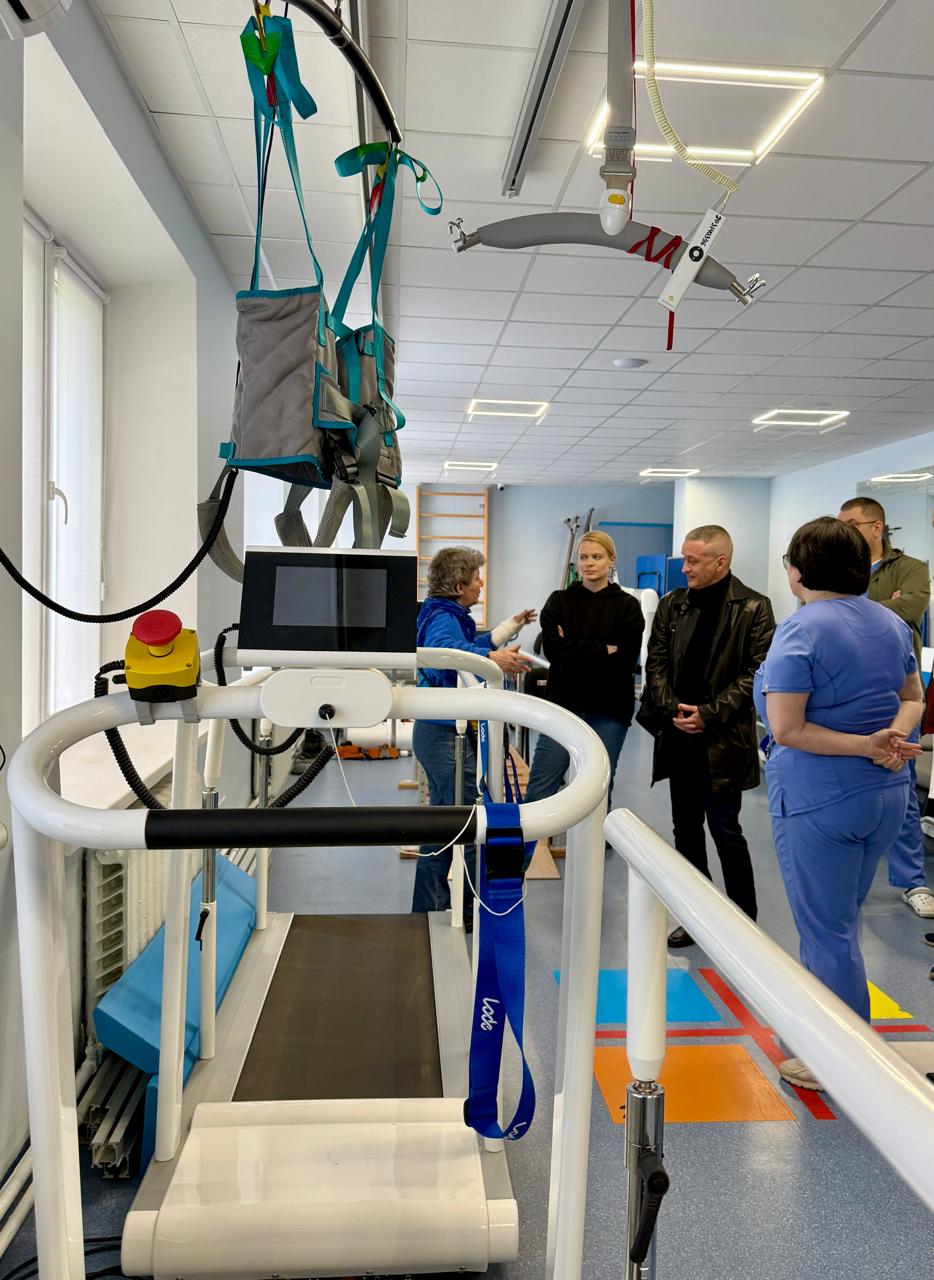
Over the past year, through cooperation with Initiative E+, Chernovetskiy Investment Group and international partners, the hospital has substantially strengthened its material and technical base:
A transport ventilator is equipment that directly determines whether a critical patient can be moved between departments or to diagnostic procedures without losing time or risking life.
"As part of the visit by our partners, Zaporizhzhia Regional Clinical Hospital received a SIRIO S2/T transport ventilator, which has been transferred to the emergency medicine department. The equipment is designed to provide modern artificial lung ventilation while transporting patients to diagnostic procedures and between departments of our hospital," explained Yurii Semenets, anaesthesiologist of the emergency medicine department.
The microscopes in traumatology and ENT microsurgery mean a different level of precision and different possibilities for patients. The vehicles are about the speed and logistics without which a large hospital simply cannot function. Surgical instruments and consumables are the basic condition without which an operating theatre cannot begin work at all.
Zaporizhzhia Regional Hospital is a clear example of how the Initiative E+ model works: not one-off handovers, but sustained partnerships in which every next item complements the previous ones. CIG as donor, Biler til Ukraine as logistics partner, the hospital as recipient — and the Initiative E+ team that brings it all together and delivers it to the operating theatre.
This model is especially critical for front-line regions. In Zaporizhzhia, the speed of medical response isn't a question of patient comfort. It's the question of whether a person in critical condition will survive once they reach the hospital.
Thank you to the team at Zaporizhzhia Regional Clinical Hospital, to Chernovetskiy Investment Group, to Biler til Ukraine, and to all the partners who make this work possible.
How to get involved: visit our SUPPORT page.